
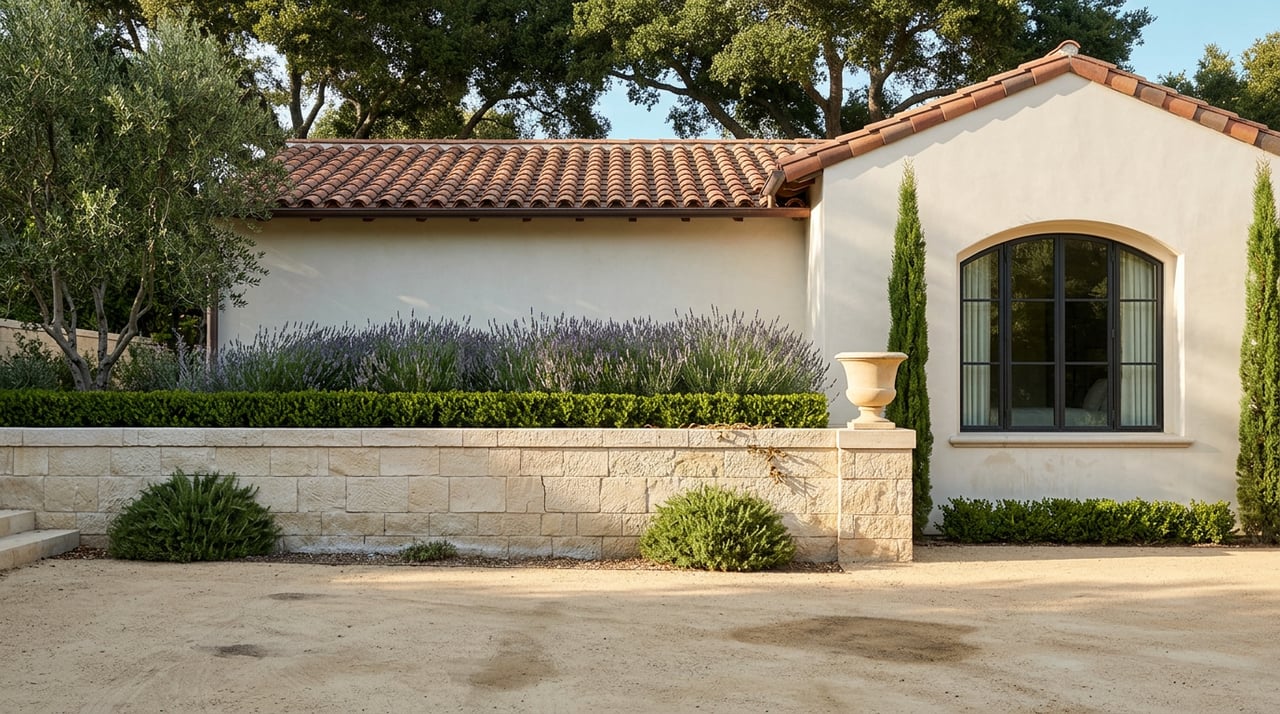
The headline number for Saratoga in mid-2026 sits around $4.1 million, with homes moving in roughly ten to fourteen days and closing at 103 to 106 percent of list. Read that on a portal and Saratoga looks like a single market. It is not. Two houses of comparable size and finish can trade a million dollars apart in the same zip code, and the gap has almost nothing to do with square footage.
The reason is that Saratoga is cut, invisibly, by three overlapping boundaries no listing photo shows: school district lines, the Highway 9 elevation break, and the city's protected-tree ordinance. Every serious buyer here is really pricing those three lines, whether they realize it or not.
The Median Is An Average Of Very Different Cities
Data from spring 2026 already tells the story if you read past the citywide figure. One 2026 breakdown of Redfin submarket data found Northwestern Saratoga essentially flat year over year at roughly −0.84 percent, while Southeastern Saratoga was down about 26.1 percent, with Saratoga Oaks the only pocket showing positive momentum at +5.8 percent. That is not one market cooling. That is four or five micro-markets moving in different directions and averaging out to a number that describes none of them.
The local MLS pull from February 2026 published by Mary Pope-Handy put the average sale price above $5.2 million, more than a million higher than the same month a year earlier, driven by the mix of ultra-high-end estate closings. Meanwhile Houzeo's report for March 2026 showed 23.91 percent of Saratoga listings taking a price reduction, up from 13.21 percent a year earlier. High-end estates and mid-tier resales are telling opposite stories at the same time.
So the useful question is not "what is Saratoga worth." It is which boundary a given parcel sits behind.
Boundary One: Four Elementary Districts, Three High School Districts
Homes inside the city limits of Saratoga feed into four different TK-8 elementary school districts: Saratoga Union, Campbell, Cupertino, and Moreland. At the high school level, addresses fall into one of three: Los Gatos-Saratoga Joint Union, Fremont Union, or Campbell Union. Saratoga Union itself is an open-enrollment district assigning students among Argonaut, Foothill, and Saratoga elementary schools with a single middle school, Redwood.
The market treats these as tiers, and the tiers do not follow neighborhood names. A house on one side of a residential street can feed Saratoga High while its neighbor across the pavement feeds Westmont or Prospect through Campbell Union. Local practitioners have long observed that Campbell Union addresses in Saratoga tend to be the most affordable, not because the schools are inferior but because the market reacts to perceived alignment with the Saratoga Union / Los Gatos-Saratoga UHSD pathway.
There is no clean published boundary map. Saratoga Union directs prospective residents to look up the parcel through the Santa Clara County Assessor, and Campbell Union publishes an address-based school locator. This is the part of Saratoga due diligence that a portal cannot do for you. A listing description that says "Saratoga schools" needs to be verified at the parcel level before you write a number on a contract, because that phrase is the single largest driver of price variance across otherwise identical inventory.
Boundary Two: Highway 9
The second line is topographic. West of Highway 9 the city climbs into the Santa Cruz foothills. That is where the estates on multiple acres, the view lots, and the gated enclaves like Parker Ranch sit. It is also where the transaction gets more complicated.
Hillside parcels frequently rely on septic rather than sewer. Slopes bring grading requirements, drainage engineering, and, in some pockets, soils that shift and demand substantial site work. The Cal Fire Very High Fire Hazard Severity Zone covers the Village area and pushes right up to the west edge of the Golden Triangle, and insurers use their own proprietary maps rather than Cal Fire's, which means two neighbors on the same street can get very different quotes.
Insurance underwriting, septic capacity, and grading history are three line items buyers rarely inspect before making an offer on a hillside home. They are also the three most common reasons a hillside deal gets renegotiated after the inspection period.
The flip side is that this is where generational estate holdings live. Parker Ranch, characterized by its gated entry and custom homes, is a long-hold market. Families buy there with a decade-plus horizon, which tightens supply further and explains why the hillside carries a persistent premium over comparable square footage on the flats — even after adjusting for lot size.
Boundary Three: The Trees
The third boundary is regulatory, and it is the one that most often surprises out-of-area buyers. Under Saratoga's tree regulations, a permit is required before removing, or in some cases even significantly pruning, a protected tree. Protected status kicks in at a ten-inch diameter at breast height for any tree, with additional protection for street trees and council-designated Heritage Trees at any size.
That threshold catches people. A ten-inch coast live oak on a side lot is not a landscape feature you can quietly clear to make room for a pool, a garage addition, or a driveway realignment. Removal requires an arborist assessment, a permit, and a replacement planting. Encroachment inside the root zone during construction triggers its own permit. Trees required as replacements under prior approvals stay protected regardless of trunk size.
An amendment adopted in March 2026 softened one edge of this for wildfire safety. Homeowners citywide may now remove trees whose trunks sit within five feet of the house without the public notification and appeal step, provided a non-flammable zone is established and maintained. A city permit and a replacement tree are still required, and in Wildland-Urban Interface areas the ordinance also reduced replacement ratios for development projects to limit fuel loads.
For a buyer, the tree line means two things. First, the shape of the site plan you can build later is constrained before you close. Second, a heavily wooded lot in the hills is not a blank canvas at any price, and pro formas that assume otherwise will underestimate soft costs. The Santa Clara County FireSafe Council's cost-share program reimburses up to 50 percent of qualifying hazardous tree removal on WUI parcels, capped at $1,000 per APN, which gives a sense of how normalized the expense has become.
What The Micro-Market Spreads Actually Show
Putting the three boundaries together produces a market map that looks nothing like the citywide median:
| Micro-market | Character | Where it sits relative to the boundaries |
|---|---|---|
| Golden Triangle | Flat lots, curving streets, mid-century and rebuilt homes | Central, largely Saratoga Union / LGSUHSD, east of Highway 9 |
| Parker Ranch | Gated custom estates, generational hold | West of Highway 9, hillside, view lots |
| Quito Village / Paseo | Entry-tier houses starting around $2M for fixer inventory | Flats, often Campbell Union district alignment |
| Saratoga Oaks | Established estate pocket, positive YoY momentum in 2026 | Adjacent to Village, mix of flat and rising terrain |
| Village edge | Walkable to Big Basin Way shops and Blaney Plaza | Sits inside or adjacent to the Cal Fire VHFHSZ |
The Golden Triangle is the cleanest example of how the boundaries stack. It is defined roughly by Cox Avenue, Saratoga-Sunnyvale Road, and Saratoga Avenue, sits on flat land, and lands mostly inside the Saratoga Union / Los Gatos-Saratoga UHSD pathway. Homes toward its interior trade for meaningfully more than homes near Highway 85 within the same neighborhood name. The Redfin submarket page for the Golden Triangle shows homes selling around thirteen days with hot properties going pending in about seven days at up to eight percent above list.
Reading A Saratoga Listing Correctly
For a buyer preparing an offer, the three-boundary framework converts to a short verification list before pricing the property:
- Pull the elementary and high school assignment from the county assessor record, not from the listing remarks.
- Confirm sewer vs septic, and for hillside parcels ask for the septic inspection and any prior grading permits.
- Ask for a copy of any arborist report on file with the city, plus a current inventory of protected trees on the parcel.
- Check whether the parcel falls in the Wildland-Urban Interface and request insurance quotes from two carriers before removing contingencies.
- Compare the last three closed sales within the same school pathway, not the same zip code.
Done in that order, the median stops being a useful anchor and the actual pricing logic of the property surfaces.
FAQ
Does "Saratoga schools" in a listing always mean Saratoga High? No. It usually implies the Saratoga Union / Los Gatos-Saratoga UHSD pathway, but the phrase is marketing language, not a district determination. Verify at the parcel level through the county assessor before relying on it.
How much does the tree ordinance actually affect a purchase? It affects buildability more than day-one carrying cost. If your plan includes an ADU, pool, driveway change, or major addition, the location of every ten-inch native and eighteen-inch non-native trunk on the site becomes a design constraint you inherit at close.
Why is the average sale price above $5 million when the median is around $4.1 million? The gap reflects a small number of very high-end estate closings pulling the average up. In a fragmented market like Saratoga, the median is the more honest citywide summary, and the micro-market spread is more honest still.
If you are weighing a purchase, a sale, or a development play in Saratoga and want the three boundaries priced into your strategy before you commit, Stilla Raissi offers a discreet, principal-led review of the parcel, the pathway, and the friction. Request a Private Valuation.