
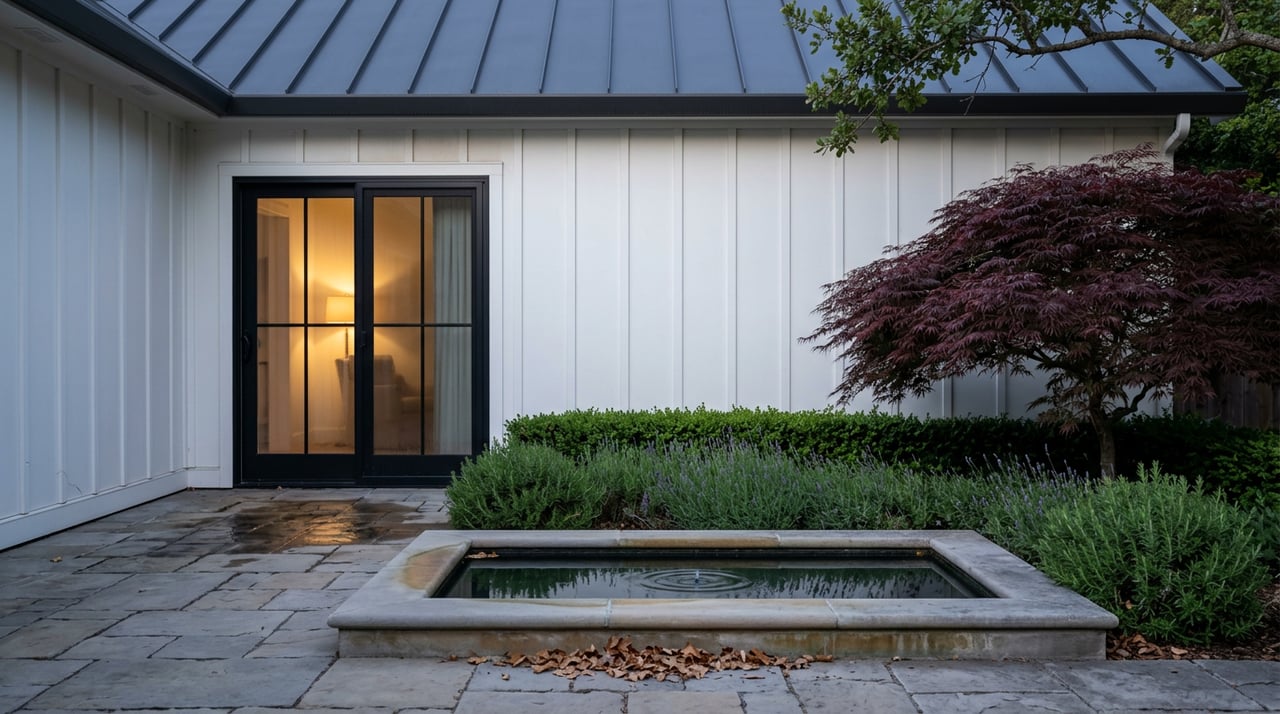
What do you do with eighteen acres of hillside in one of the most expensive zip codes in the country when a developer wants to subdivide it and you would rather it stayed whole? In 1966, the people who owned Hakone had an answer: they refused the subdivision money and sold the estate to the City of Saratoga instead, on the condition that it remain a garden. Sixty years later, that decision is the reason you can walk down Big Basin Way this week and watch your neighbors float paper lanterns across the same koi pond those owners chose to protect.
Hakone's annual Toro Nagashi, the lantern-floating ceremony, runs August 18 through 21 this year, from 6:30 to 8:30 p.m. each night. If you have lived in Saratoga long enough to have gone once, you know the basic shape of it: you write a message on a lantern, a docent leads a brief remembrance, and then the lanterns go out onto the water while the light fades over the hill garden. What most people miss is why the pond is still there to float them on.
The choice nobody talks about
Hakone's story starts with Isabel Stine, a San Francisco philanthropist who fell for the Japanese Pavilion at the 1915 Panama-Pacific International Exposition and built her own version of it in the Saratoga hills that same year. She hired master gardener Naoharu Aihara to lay out the grounds and architect Tsunematsu Shintani to build the structures, and for decades the estate was exactly what its scale suggests: a private retreat, the kind of property where the owner hosts weddings and operas for her own circle rather than for ticket buyers.
That is the part of the story every garden brochure repeats. The part that gets skipped is what happened when the private-estate era ended. By the mid-1960s, Hakone had passed through several owners, and the pressure on a piece of land that size, that close to the village, would have been obvious to anyone who has ever looked at a Saratoga parcel map. Subdivide eighteen hillside acres into buildable lots and the numbers work themselves. The owners at the time turned that down. They offered the property for sale only to the City of Saratoga, and in 1966 Hakone became a public park rather than a private subdivision. It is worth sitting with that for a second the next time you are standing at the edge of the pond this week. The reason there is a pond to stand at, rather than six more houses with pools and board-and-batten siding, is that someone with the legal right to cash out chose not to.
In a Saratoga Falcon report, Jacob Kellner, who has run Hakone's grounds crew for more than fourteen years, described the place as somewhere people go to "commune with nature," a break from the pace of everything else in the valley. That is a nice sentiment on any ordinary Tuesday. During Toro Nagashi week, with lanterns drifting and the hill lit from below, it reads less like a slogan and more like a description of what the 1966 sale actually bought the town.
What's actually happening this week
The ceremony itself has a rhythm to it that repeats each of the four nights:
- Lantern writing and the remembrance ceremony run through the evening, 6:30 to 8:30 p.m., August 18 through 21.
- Bon Odori, traditional Japanese folk dancing tied to the Obon observance, runs nightly from 7:00 to 7:30 p.m. Guests are welcome to join in, and traditional attire is encouraged but not required.
- Hakone Foundation members receive a 50 percent discount on the ceremony, a detail worth knowing if you have been meaning to join the Foundation anyway.
Obon itself is the older tradition underneath the ceremony, a Buddhist observance about honoring ancestors during the period when, tradition holds, the boundary between the living and the departed is at its thinnest. Toro Nagashi is the closing gesture of that observance, the moment the lanterns go out onto the water to send the visit back.
If you are planning to go beyond this week, one policy detail changed in January 2026 that is easy to miss if you have not checked Hakone's site recently. The garden used to offer free admission to any Santa Clara County resident. That is no longer the case. Free entry on the first Tuesday of each month is now limited to verified Saratoga residents, and you will need to show a government-issued photo ID with a Saratoga address, a driver's license, California state ID, or senior ID all qualify. Everyone else pays the standard adult rate of $15, with children four and under admitted free. It is a small tightening, but if you have been telling out-of-town friends they can get in free because they live in the county, that advice is now out of date.
Why the current exhibit fits this particular week
Inside the Cultural Exchange Center, Hakone is running a piece that lines up with the water theme of the ceremony almost too neatly to be coincidence. UMI, by Bay Area artist Chris Sicat, is on view through December and takes Hokusai's The Great Wave as its starting point, using immersive paintings and installation to trace the history of Prussian Blue pigment and the exchange of artistic ideas between Japan and the West. Sicat teaches at the Cilker School of Art and Design at West Valley College, a few minutes down the road in Saratoga, which means the exhibit is not an import from somewhere else. It is a local artist working through a Japanese visual tradition in the same week the garden is staging one of that tradition's oldest living ceremonies. If you go for the lanterns, budget twenty extra minutes for the gallery.
The quiet routine most people skip
Separate from the ceremony, Hakone Zendo holds Rinzai Zen meditation every Sunday in the historic Moon Viewing House, open to anyone looking for a slower version of what the lantern nights offer in a more public form. It is easy to drive past Hakone all year and only think of it as the place you take visiting family for the koi pond and the bamboo grove. The Sunday sessions are a reminder that the garden's actual daily use, for the people who show up week after week, has always been quieter than the festival calendar suggests.
The land underneath the ceremony
None of this changes what Toro Nagashi looks like on the ground: lanterns on dark water, a dance most people watch rather than join, a hillside that goes gold and then blue as the light drops. But it is worth carrying the 1966 decision with you the next time you walk the path down to the pond. Saratoga has plenty of land that was subdivided the ordinary way, lot by lot, decade by decade, and that land is why the town looks the way it does today. Hakone is the counterexample sitting in plain sight on Big Basin Way, the eighteen acres someone decided were worth more whole. The lanterns this week are floating on the result of that decision.
If you are new to town and have not made it to Hakone yet, this is the week to go. Tickets for Toro Nagashi are sold through Hakone's own site, and the garden's small lot fills fast on ceremony nights, so plan on street parking and a short walk.
For residents thinking about what else in Saratoga's land use history shapes the neighborhood they live in, that is exactly the kind of question Stilla Raissi spends her days answering, one parcel and one property at a time. Request a Private Valuation when you are ready to talk specifics.