
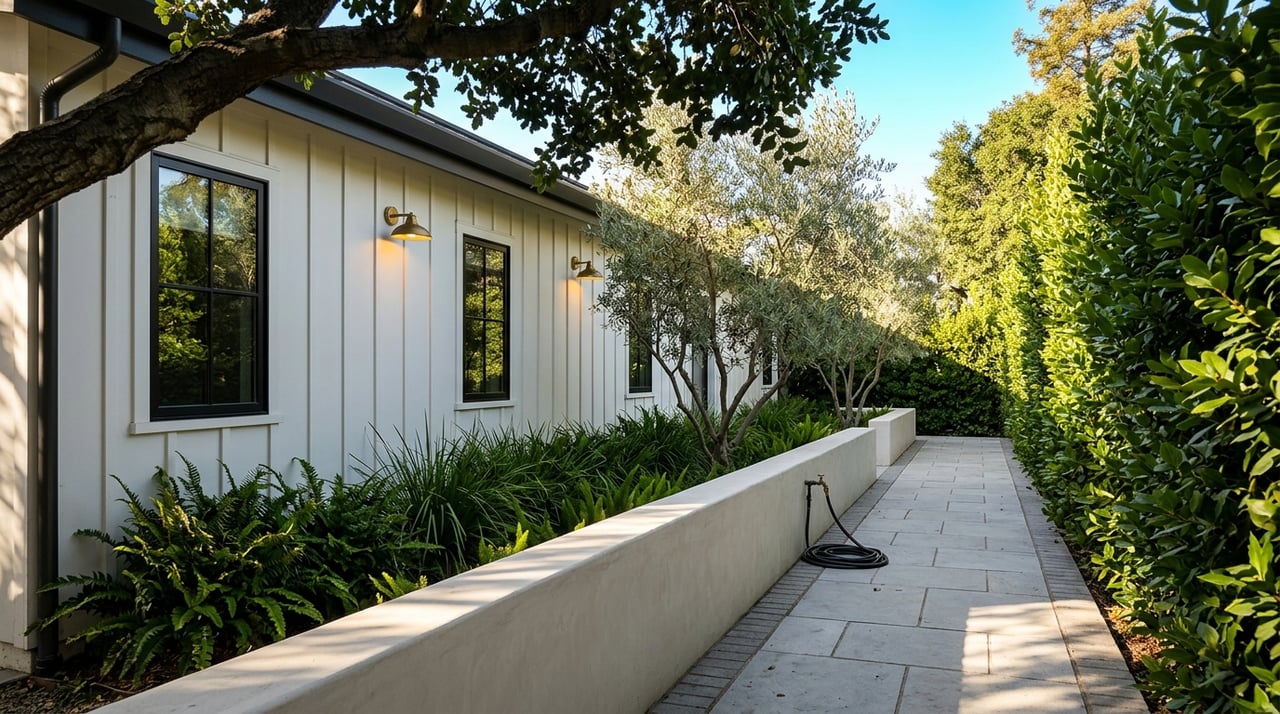
What makes a Saratoga luxury home feel truly private? It is rarely just the lot size. In Saratoga, privacy is usually shaped by a mix of lot depth, mature trees, road placement, slope, and the scale of nearby homes.
If you are searching for a home that feels tucked away but still practical for daily life, you need to look beyond the listing photos. The right property can offer a quiet, sheltered setting, but that setting is also influenced by zoning rules, tree protections, and even wildfire requirements in some areas. This guide will help you evaluate privacy and setting in Saratoga luxury homes with a sharper eye. Let’s dive in.
Privacy in Saratoga Starts With the Site
In Saratoga, privacy is a systems issue. The overall feel of a property comes from how the lot geometry, landscaping, slope, neighboring massing, and street location work together.
That matters because two homes with similar square footage can feel completely different in person. One may feel open and exposed, while another feels calm and secluded, simply because the site planning is better aligned with the land.
Lot Shape Matters More Than You Think
A wide or deep lot often creates more useful separation from neighbors than acreage alone. Legal boundaries, easements, and net site area can affect how much of the parcel is actually usable for landscape screening, outdoor living, or future improvements.
In Saratoga, the city notes that easements are typically listed in the preliminary title report, and some easements reduce net site area. Slope over 10% can also reduce the net site area used to calculate floor area allowances, which can affect how a property functions over time.
Setbacks Influence Exposure
Setbacks play a major role in how private a home feels. In Saratoga’s residential districts, front, side, and rear setback requirements help shape the distance between structures, and second-story side setbacks are often larger than first-story setbacks.
In the Hillside Residential district, those setbacks are generally even larger, including rear setbacks of 50 to 60 feet depending on the lot and story count. For you as a buyer, that can translate into more breathing room, fewer direct sightlines, and a quieter visual experience.
Height and Massing Affect Sightlines
Saratoga generally limits single-family homes to 26 feet in height, with limited approvals for more. In hillside areas, structures are also limited to two stories and may face additional ridge-related height restrictions.
This is one reason some Saratoga neighborhoods maintain a lower-profile, sheltered feel. Privacy is not only about distance. It is also about whether neighboring second-story windows, rooflines, and terraces overlook your living spaces.
Trees Often Create the Best Privacy
In Saratoga, mature landscaping is one of the biggest reasons a home feels serene. The city places clear value on its tree canopy and rural attractiveness, and that character is closely tied to how many luxury properties achieve privacy without feeling closed off.
Trees can soften views of neighboring homes, reduce the visual impact of the street, and create a natural frame around outdoor living areas. In many cases, the canopy is the privacy wall.
Protected Trees Can Be an Asset
Saratoga protects all trees 10 inches in diameter or larger, plus certain native species at 6 inches or larger. When the city evaluates tree removal, it considers shade, privacy impact, scenic beauty, property values, erosion control, and general welfare.
For buyers, this means mature trees usually add lasting value to the privacy of a property. It also means your future landscaping options may be more regulated than expected, especially if the screening you see today depends on protected trees.
Neighboring Trees Matter Too
Tree rules do not stop at the property line. Saratoga requires an arborist report and review when construction is proposed under or within five feet of the dripline of a protected tree, including trees on adjacent lots.
That is important during due diligence. A neighboring tree may help preserve your privacy today, but it may also shape what you or the neighbor can build, prune, or redesign later.
Hillside Settings Can Feel More Secluded
Many buyers assume a hillside home automatically means more privacy. Sometimes that is true, but not always.
Saratoga’s hillside specific plan covers about 2,100 acres and is designed to preserve scenic hillside resources by limiting development intensity and regulating utility expansion. In practice, some of the most private-feeling homes are the ones where the slope, building placement, and landscaping work together to keep nearby structures and road activity out of view.
The Hillside Tradeoff
The Hillside Residential district is intended to preserve the natural environment, rural character, wooded areas, and ridgelines. That can create a beautiful sense of separation, but it can also bring more design and maintenance constraints.
If you are considering a hillside property, look at the full picture. Slope, access, tree coverage, and ridge-related restrictions may all affect future plans, from additions to outdoor improvements.
WUI Areas Need Extra Attention
Some of Saratoga’s western hillsides are in the Wildland Urban Interface, or WUI. The city notes that these areas are subject to special fire protection measures, including guidance around the first five feet from the structure and broader defensible-space zones.
That creates a real privacy-and-maintenance tradeoff. A heavily wooded setting may feel wonderfully secluded, but you should also understand how vegetation management requirements may influence the landscape over time.
Roads and Access Shape the Setting
A home can be visually screened and still not feel fully private. Sound, traffic patterns, and street placement often make the difference between a home that feels peaceful and one that simply looks private in photos.
Saratoga’s circulation materials note that SR 85 is the city’s only freeway, while SR 9 is a scenic corridor and the Village sits off Highway 9. Homes closer to these more active routes may offer convenience, while properties deeper inside neighborhoods or on longer drives may feel quieter and more tucked away.
Quiet Is Part of Privacy
The city’s noise standards are intended to preserve a quiet residential environment. Saratoga also regulates powered garden tools and leaf blowers by time and decibel level.
While these rules help support neighborhood quiet, your showing-day experience still matters. A property should be evaluated not only for visual screening, but also for how it sounds in the morning, late afternoon, and evening.
Privacy Features Are Not Always Easy to Change
One of the biggest mistakes luxury buyers make is assuming they can simply add privacy later. In Saratoga, that is not always straightforward.
Fence height, window placement, setbacks, tree protections, and design review can all affect what changes are possible. A home that already has a strong privacy framework is often more valuable than one that needs a major fix.
Fences and Hedges Have Limits
Saratoga’s standards allow certain privacy responses for second-story windows near side or rear property lines, such as angled windows, higher sills, or frosted glazing. In some cases, a six-foot fence or hedge may also be required.
At the same time, solid fences taller than six feet need approval. So if you are relying on a future fence plan to solve exposure, make sure you confirm what is actually permitted.
Remodels Can Change the Outcome
New construction and substantial remodels may trigger different review paths in Saratoga. Projects that do not fully comply with objective standards can move into discretionary design review or Planning Commission review.
That matters for both your home and the one next door. Privacy can change if a neighboring property adds square footage, shifts window placement, or modifies its massing within the city’s review framework.
A Smart Showing-Day Checklist
When privacy is a top priority, it helps to evaluate a Saratoga property methodically. A beautiful first impression is not enough.
Use this checklist to look beyond the surface:
- Ask for the survey, title report, easement map, and any available net site area calculations.
- Visit the property at different times of day to evaluate sightlines, light, and noise.
- Look up at tree canopy and overhang, not just across the yard.
- Ask whether there are pending remodels, additions, or subdivisions nearby.
- Confirm whether the home is in the Hillside Residential district, Saratoga Woods overlay, or a WUI area.
- Evaluate how the street, driveway, and access route affect the sense of arrival and seclusion.
- If you may remodel, ask which approval path a future project would likely follow.
Why Local Analysis Matters in Saratoga
In a market like Saratoga, privacy is rarely obvious from square footage, lot size, or price alone. The most successful purchases come from understanding how city rules and site conditions interact before you write an offer.
This is where a detail-oriented review matters. When you evaluate setbacks, trees, neighboring massing, access, and future change together, you get a clearer picture of how private a home will actually feel, both now and later.
If you want a discreet, data-driven perspective on Saratoga luxury homes, Stilla Raissi offers thoughtful guidance tailored to complex properties, private settings, and high-value decisions.
FAQs
How is privacy created in Saratoga luxury homes?
- In Saratoga, privacy usually comes from lot depth, mature landscaping, setbacks, building height, slope, road placement, and the scale of surrounding homes rather than acreage alone.
Do mature trees improve privacy in Saratoga properties?
- Usually yes. Mature trees often provide the most effective visual screening, but many trees are protected in Saratoga, so removal and pruning may be regulated.
Does a Saratoga hillside home always offer more privacy?
- No. Hillside homes can feel more secluded, but slope, ridgeline rules, access, tree coverage, and wildfire requirements can all affect the experience and future flexibility.
Can you add a taller privacy fence to a Saratoga home later?
- Not always. Solid fences taller than six feet need approval, and some privacy solutions depend more on windows, setbacks, and landscaping than fence height alone.
What should you review before buying a private Saratoga property?
- You should review the survey, title report, easements, net site area, protected trees, zoning district, nearby planning activity, and whether the property is in a WUI or hillside area.
Why does road location matter for Saratoga home privacy?
- Road location affects both noise and the feeling of seclusion. Homes closer to SR 85, SR 9, or more active routes may feel different from homes on quieter interior streets or longer private drives.