
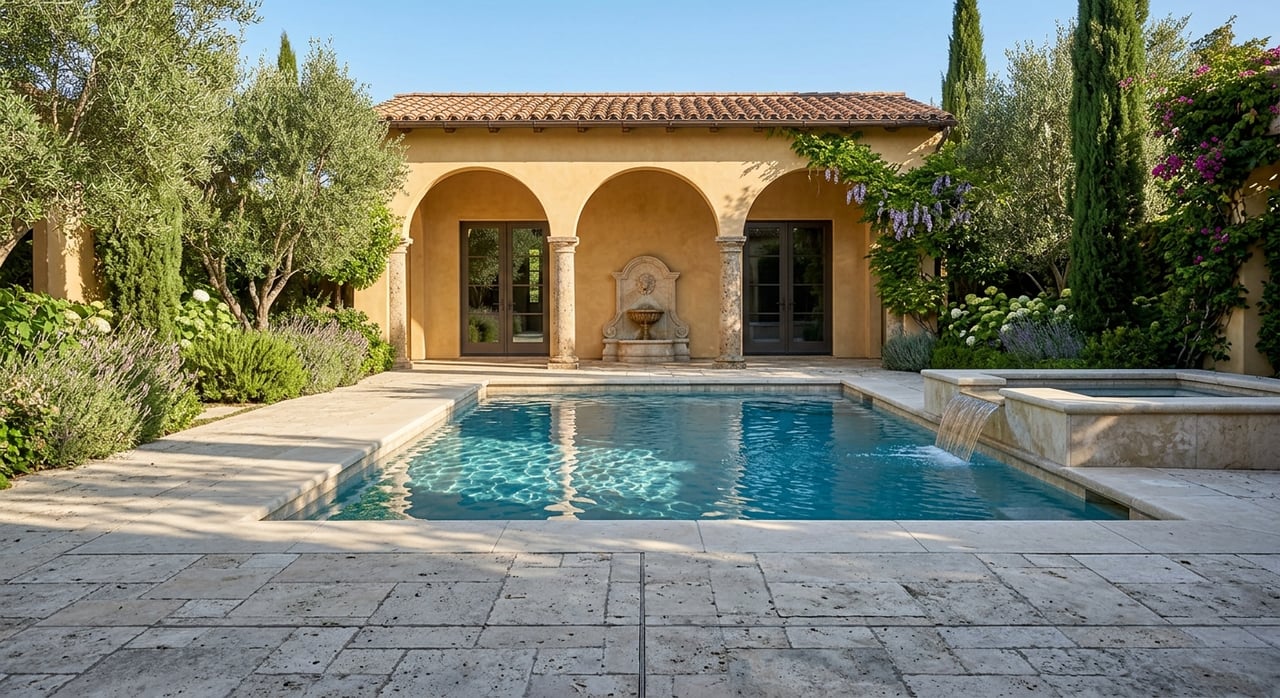
What makes a place feel like a getaway even when it is home? In Saratoga, the answer is not one resort or one attraction. It is the way the city blends scenic foothills, larger residential parcels, historic village charm, gardens, trails, wineries, and cultural spaces into daily life. If you are trying to understand why Saratoga leaves such a distinct impression, this guide will show you the elements that create that relaxed, refined feel. Let’s dive in.
Saratoga’s setting shapes the lifestyle
Saratoga’s resort-like feel starts with its physical character. According to the city’s Community overview, Saratoga is a small-town residential community of about 31,000 with a historic downtown village, prestigious neighborhoods, and a strong preference for preserving its semi-rural ambiance.
That identity is reinforced by the city’s 2040 General Plan Executive Summary, which emphasizes a predominantly small-town residential character with larger residential parcels, long-established neighborhoods, scenic hillsides, and open-space areas. In practical terms, that means Saratoga often feels more tucked into the landscape than built over.
The city also prioritizes tree cover and scenic viewsheds. That matters because the atmosphere you experience every day is shaped not just by homes, but by what surrounds them. In Saratoga, mature trees, foothill backdrops, and a more open pattern of development all contribute to a calmer visual rhythm.
The Village keeps Saratoga grounded
A resort-like lifestyle can feel polished without feeling impersonal. Saratoga Village helps create that balance. The city describes Saratoga Village as the heart of the community, with dining, shops, galleries, coffee houses, parks, trails, and historic landmarks, including buildings dating to the late 1800s and early 1900s.
Instead of a busy commercial core, the Village feels compact and historic. You can picture a morning coffee, an easy lunch, a gallery stop, or an evening dinner, all in a walkable setting that feels local and established rather than rushed.
That sense of scale matters for buyers who want convenience without a dense urban environment. In Saratoga, the downtown experience supports the broader lifestyle instead of competing with it.
Gardens and open space create a retreat feel
One reason Saratoga feels different from many residential communities is the depth of its park and trail network. The city’s Open Space and Conservation Element reports roughly 148 acres of parkland, about 63 acres improved for active park use, 14 city parks, and about 31 linear miles of existing and dedicated trails.
Those numbers help explain why outdoor access feels so integrated into everyday life. This is not just about occasional recreation. It is about having meaningful open space woven into the structure of the city.
The same planning document also states that Saratoga seeks at least 5 acres of high-quality park and open-space area per 1,000 residents and supports trail linkages to city, county, state, and regional parks. That long-range planning helps preserve the sense of breathing room people associate with Saratoga.
Hakone Gardens adds serenity
Few places capture Saratoga’s retreat-like identity better than Hakone Gardens. The city describes it as one of the oldest Japanese estate, retreat, and gardens in the Western Hemisphere, set across 15.5 acres with a picnic area, hillside and high trails, a bamboo park, water-strolling gardens, a Cultural Exchange Center, and tea ceremonies.
This is one of Saratoga’s clearest lifestyle anchors. The setting invites quiet walks, slower afternoons, and a more reflective pace that feels closer to a destination experience than a typical neighborhood amenity.
For residents, it is also part of everyday access rather than a special trip. The city notes that Saratoga residents can enter free on the first Tuesday of every month, which adds another layer to the feeling of living near something special.
Montalvo brings arts and nature together
Montalvo Arts Center strengthens Saratoga’s identity in a different way. Located in the foothills above Saratoga, Montalvo says visitors can explore more than 100 acres of woodland hiking trails and gardens, picnic on the Great Lawn, and experience outdoor art.
The city’s open-space plan describes the broader site as 175 acres of woodland with art installations, hiking trails, art and music programs, community classes, and an artist-in-residence program. That blend of landscape and culture gives Saratoga a polished but relaxed character.
This is part of what makes Saratoga feel elevated without feeling formal. You are close to places where nature and the arts coexist, and that tends to shape the whole tone of the community.
Trails and preserves expand daily options
Saratoga’s retreat quality is also supported by the larger network around it. The city describes Saratoga Quarry Park as a 64-acre former quarry about 2 miles west of downtown Saratoga and a gateway to the Santa Cruz Mountains.
The city’s open-space plan also identifies Fremont Older Preserve, a 739-acre preserve with hiking, bicycling, and equestrian use, along with Upper Stevens Creek Park, a 655-acre park with a reservoir and more than 12 miles of trails that connect to Fremont Older. For more everyday movement, the same plan identifies Joe’s Trail as a 1.5-mile greenway in north Saratoga.
Taken together, these spaces make it easy to imagine a lifestyle built around early walks, weekend hikes, and quick access to scenic outdoor settings. That is a major part of why Saratoga can feel restorative in a very real, daily way.
Wine country energy is part of daily life
Saratoga’s resort-like reputation is also tied to its long connection to wine. The city’s history page notes that vines and orchards became part of Saratoga’s identity in the 1800s, and that heritage is still visible today.
For residents, this creates something more than a nice backdrop. It brings a wine-country atmosphere into the local lifestyle, with tasting experiences and hillside views close to home.
The Mountain Winery in Saratoga offers wine tasting Friday through Sunday along with an intimate 2,500-seat outdoor amphitheater and event spaces with vineyard and rolling-hill views. Mount Eden Vineyards offers appointment-only tastings on a mountaintop estate 2,000 feet above Silicon Valley.
House Family Vineyards describes itself as a 73-acre family compound above Saratoga, while Savannah-Chanelle Vineyards says its villa grounds overlook Santa Clara Valley, vineyards, and the redwood forest. These are strong examples of how Saratoga combines scenic setting with leisure and culture in a way that feels destination-worthy.
Culture rounds out the experience
A true resort-at-home feeling usually depends on variety. You want quiet, beauty, and convenience, but you also want things to do. Saratoga delivers that mix through its cultural layer.
Montalvo presents itself as an oasis of arts and nature, and the city also frames Villa Montalvo as a hub for Saratoga’s art and music scene. Add the galleries, coffee houses, restaurants, and historic character of the Village, and you get a community where outings feel curated rather than routine.
This is an important distinction for buyers comparing Saratoga to other Silicon Valley markets. Saratoga does not rely on one entertainment district or one flagship amenity. Its appeal comes from a well-balanced lifestyle mix that feels cohesive and enduring.
Why Saratoga feels restful
When people say Saratoga feels like a resort at home, they are usually responding to a combination of factors. The city’s own planning framework supports lower-density living, scenic preservation, tree cover, and open-space connections. The amenities then build on that foundation with gardens, trails, wineries, and cultural venues.
In other words, the feeling is structural, not accidental. Saratoga was shaped over time to preserve the qualities that people now describe as peaceful, elegant, and retreat-like.
Historically, that identity goes back a long way. The city says Saratoga first took on a resort identity after the Pacific Congress Springs hotel opened in the 1860s, which helps explain why the area’s leisure-oriented reputation has such deep roots.
What this means for homebuyers
If you are considering a move to Saratoga, lifestyle matters as much as square footage. The appeal here is not only about a home itself, but about how the setting supports daily living. Larger residential parcels, foothill scenery, mature landscaping, and access to recreation and culture all shape the ownership experience.
For buyers at the luxury end of the market, Saratoga’s environment can be especially compelling. Estate-style properties, architectural homes, and view-oriented residences often feel aligned with the city’s broader character. The result is a market where setting, privacy, and atmosphere carry real importance.
If you are weighing Saratoga against nearby communities, it helps to look beyond commute maps and list prices. Think about how you want your mornings, weekends, and everyday routines to feel. In Saratoga, that answer is often what makes the city stand out.
If you are exploring Saratoga as your next move or evaluating how your property fits into this uniquely refined market, Stilla Raissi offers discreet, data-informed guidance shaped by deep local knowledge and a design-aware perspective.
FAQs
Why does Saratoga feel more like a retreat than a typical suburb?
- Saratoga combines larger residential parcels, scenic hillsides, tree cover, open space, historic village charm, gardens, wineries, and cultural venues, creating a setting that feels calm and destination-like.
What outdoor amenities make Saratoga feel resort-like?
- Key outdoor anchors include Hakone Gardens, Montalvo Arts Center’s trails and gardens, Saratoga Quarry Park, Joe’s Trail, Fremont Older Preserve, and Upper Stevens Creek Park.
How does Saratoga Village support Saratoga’s lifestyle appeal?
- Saratoga Village adds a compact historic downtown experience with dining, shops, galleries, coffee houses, parks, trails, and landmarks, which gives the city convenience without a dense urban feel.
What role do wineries play in Saratoga’s identity?
- Wineries help reinforce Saratoga’s wine-country atmosphere, with tasting experiences, vineyard views, and event spaces that add a leisure-focused layer to everyday life.
Is Saratoga’s resort-like character supported by city planning?
- Yes. Saratoga’s General Plan emphasizes small-town residential character, larger residential parcels, scenic hillsides, open space, tree cover, and scenic viewsheds, all of which support the city’s retreat-like feel.